


In January, I quit my job.
6 months into a fast growing startup, I had incredible mentorship, enormous autonomy, and generous equity, having joined as the first employee.
Even now, I find it hard to articulate exactly why I had to go; there were so many different catalysts swirling inside of me.
I wanted my work to express my creative side more; I wanted my job to take advantage of my broad curiosity; I wanted to be more than an employee, I wanted freedom. Freedom from what? Freedom to do what? I didn’t know.
But on nights and weekends, I dreamed of alternate lives as a writer, an investor, an indie game developer, an artist, a musician, a traveling vlogger. I’d spent a long time warily disregarding these siren songs.
You never quite outgrow being a hopeless romantic. The object of your fantasy just shifts, from meet-cute daydreams to finding your soul-career, to taking that elusive road less traveled by and finding, at its end, your destined vocation blooming from the center of your ikigai. I was never one to be content with what I had.
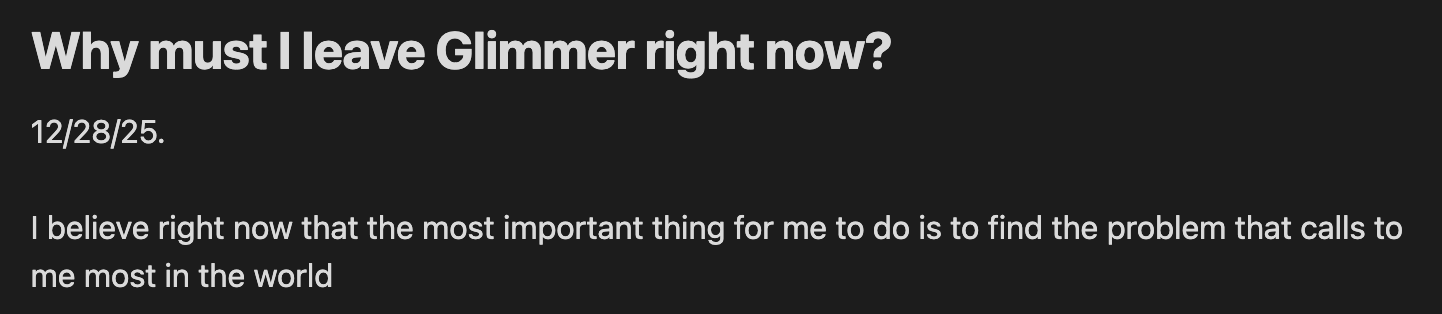
So, with all these different fingers on the trigger, I made the choice and left.
Immediately after doing so, I looked around and realized I had jumped out of a plane headed somewhere nice, into the open ocean, where I was now paddling on my own.
With no managers or mentors, teammates or coworkers, office to go to or structure to anchor my life, total freedom was at once euphoric and crushingly lonely.
And when nobody wakes you up in the morning, and when nobody waits for you at night, and when you can do whatever you want, what do you call it, freedom or loneliness? — Milan Kundera
It feels ridiculous to say this but I felt very trapped initially. The problem wasn’t that I had no idea what I wanted to do, it was that I was chasing too many things at once. There’s an old aphorism that “He who chases two rabbits catches neither,” well, I was chasing 10.
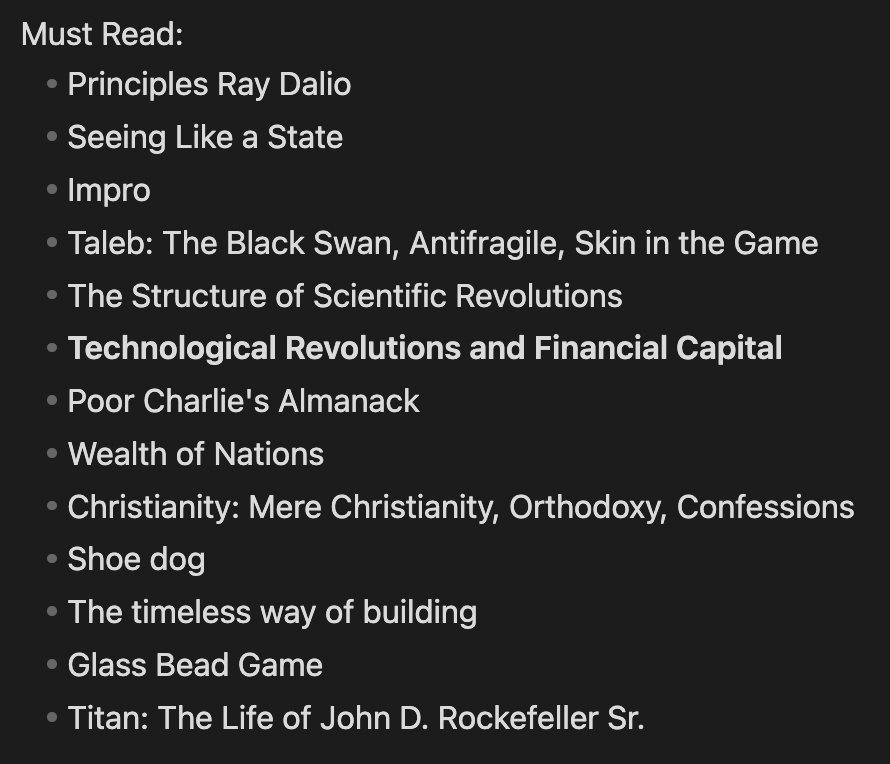
I wanted to do a “4 week sprint” where all I did was read through an entire backlog of books. I felt convinced that consuming this curated pile would unlock an extraordinary understanding of life, the universe, and basically enlightenment.
At the same time, I had dream projects I had been waiting for the right time to work on for years, which ranged from simulating the natural evolution of brains, to making a 24/7 game world populated by AI’s.
I also wanted to write more on this blog, and get better at investing, to start uploading song covers online, to work on my dream indie game idea, to travel the world, to build a community and find time to go on dates.
Not even the unbound day, all twenty-four hours of it finally mine, could spare me the having to commit to something at the cost of abandoning all the other figs in my tree.
At the root of all this confusion and constant reorientation was a question: what is my ambition?
Is it truly my ambition to found a successful startup—or is that just the ambition of those around me? Is it to spend my days reading and writing about the topics that interest me or will I want more than that? Could I be content expressing my creativity through art and music or would that be going against my natural talents? Am I wasting time just building all these side projects? If I weren’t chasing the approval of others, fame, or money just for money’s sake, what would I really be doing?
Slowly, week by week, my savings dwindled.
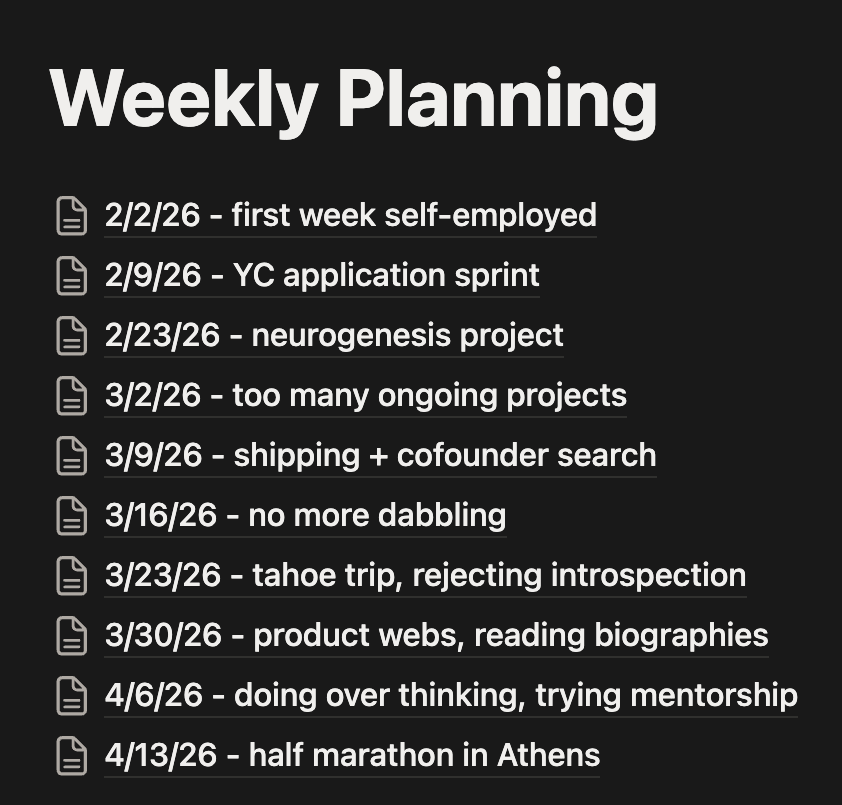
At the end of April I decided I would commit to building a consumer AI company. What follows are the many lessons I learned while building and selling consumer AI products from April until now in August. Feel free to skip to the conclusion.
To start with, I talked to many people and thought I found a universal pain (”everybody hates todo apps! nobody has a productivity system they like! everyone’s just throwing reminders on their calendar and texting themself todos!”).
To solve it, I built a minimal todo list “reimagined for the age of AI” called Someday—to help you get to all those “someday” items at the bottom of your list. It had an AI assistant embedded inside that would knock out tasks for you on your list. It was a cool idea, but most likely doomed from the start because todo apps, like many other consumer productivity apps, are a tarpit category. It’s a tarpit because of low pain intensity, and because users have near zero willingness to pay—the status-quo alternatives (Notes, calendar, Reminders app) are free and mostly good enough. It took me more than a month to realize this. If a pain is genuinely acute, a subgroup will already be spending absurd money or labor to hack around it. Always ask the only question that predicts WTP: what are you already spending (money, time or effort) to solve this?
Why did it take me so long to learn this? I made many mistakes and learned a number of lessons:
First, I built all sorts of UX flourishes, “high-craft” thoughtful designs, all the neat features my dream todo list would have. The truth is that product building isn’t about creating tons of tactically useful features, instead it is about delivering a cohesive product that solves one core, painful problem really well.
I thought, because I and my friend were using the product and finding it very useful, it meant I had built something useful for a lot of people. In reality it was really just overfit to me and him. Selection bias (who you talk to) and motivated reasoning (building for yourself) can give you the wrong signal about market demand. There’s probably a deeper conceit underlying this, that you can design a winning product from first principles. In consumer this is almost always delusional. Your instinct is right but your idea is probably wrong.
In consumer, it almost never happens that you interview your way to the right product that will serve the market. Yes, you should ask users about their problem and how they’ve tried to solve it, but you won’t make the leap from problem discovery to the right product solution through “taste” or “understanding latent demand”. Instead, treat your ideas as experiments to falsify. That means prototype as cheaply as possible (even just doing it yourself like Nick Swinmurn did with Zappos: he would go to the mall, buy the shoes, and then mail them to customers), get it in the hands of users, and observe their reaction.
I also failed to validate consumer WTP by never asking users to pay. After building the product I launched it entirely for free, thinking I could validate demand through observing usage data from my 100 beta users. In reality, I needed to talk to individual users who loved the product and ask them to pay for it. When I finally did this in user interviews, I was shocked at how people who told me they loved using it weren’t willing to pay even $5 a month for it. I was also amazed to find out a user was willing to pay $15 a month and they were using it in a completely different way than I had in mind.
Most importantly, I learned how easy it is to feel productive with AI coding agents. Like all cheap dopamine, you can get addicted to AI tools that give the illusion of productivity. It seemed plausible to me in the beginning that faster iteration from coding agents can to some extent substitute the hard part of knowing what exactly to build—just try more ideas! I now think this is naive and a mirage. In truth, winning ideas—products that serve the market—are incredibly scarce amidst the landscape of losing ideas, and it is more important than ever to know what not to build. Old principles are still timeless: focus is saying no, and the only job of a product builder is still, right product, right time.
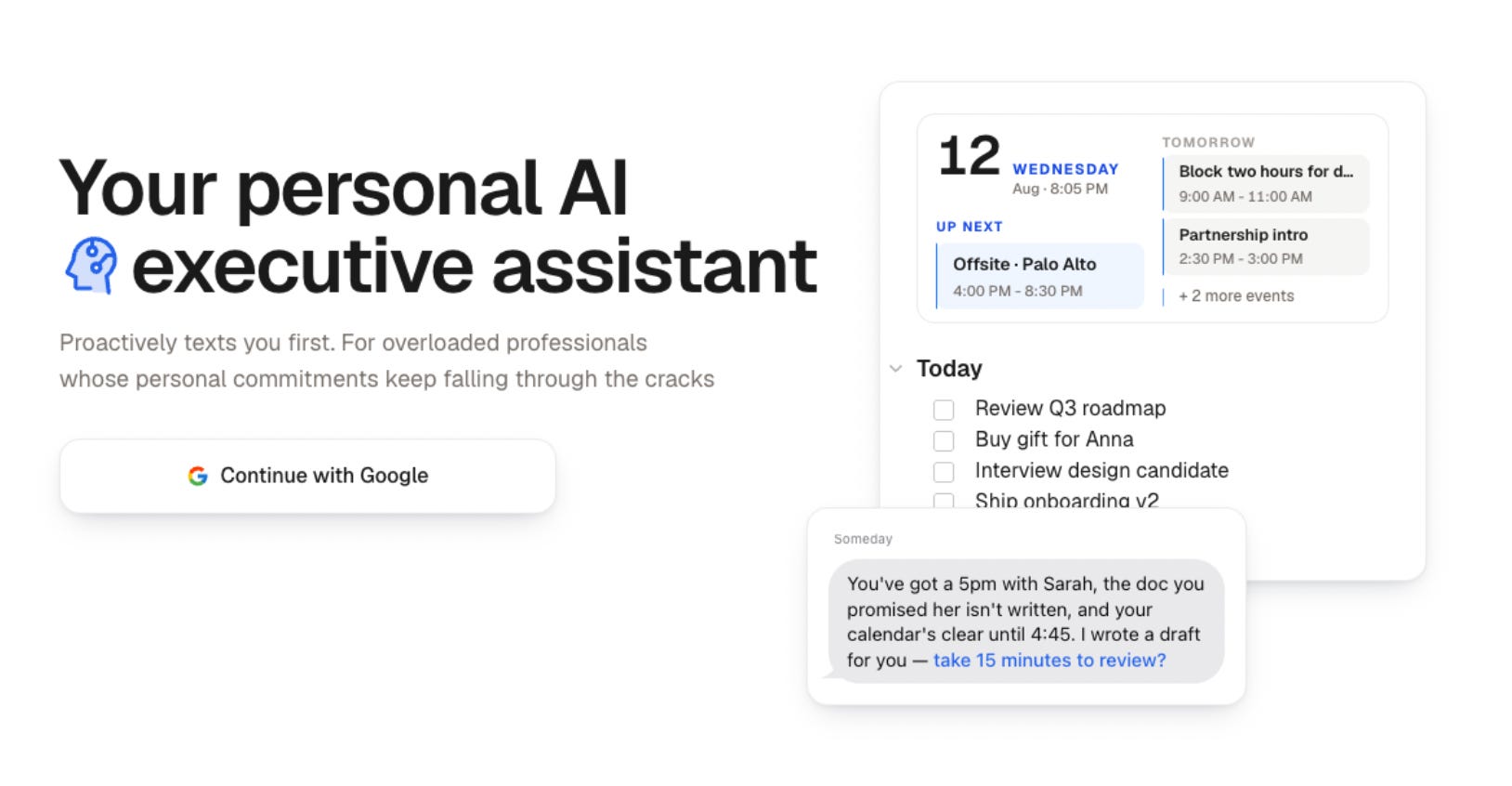
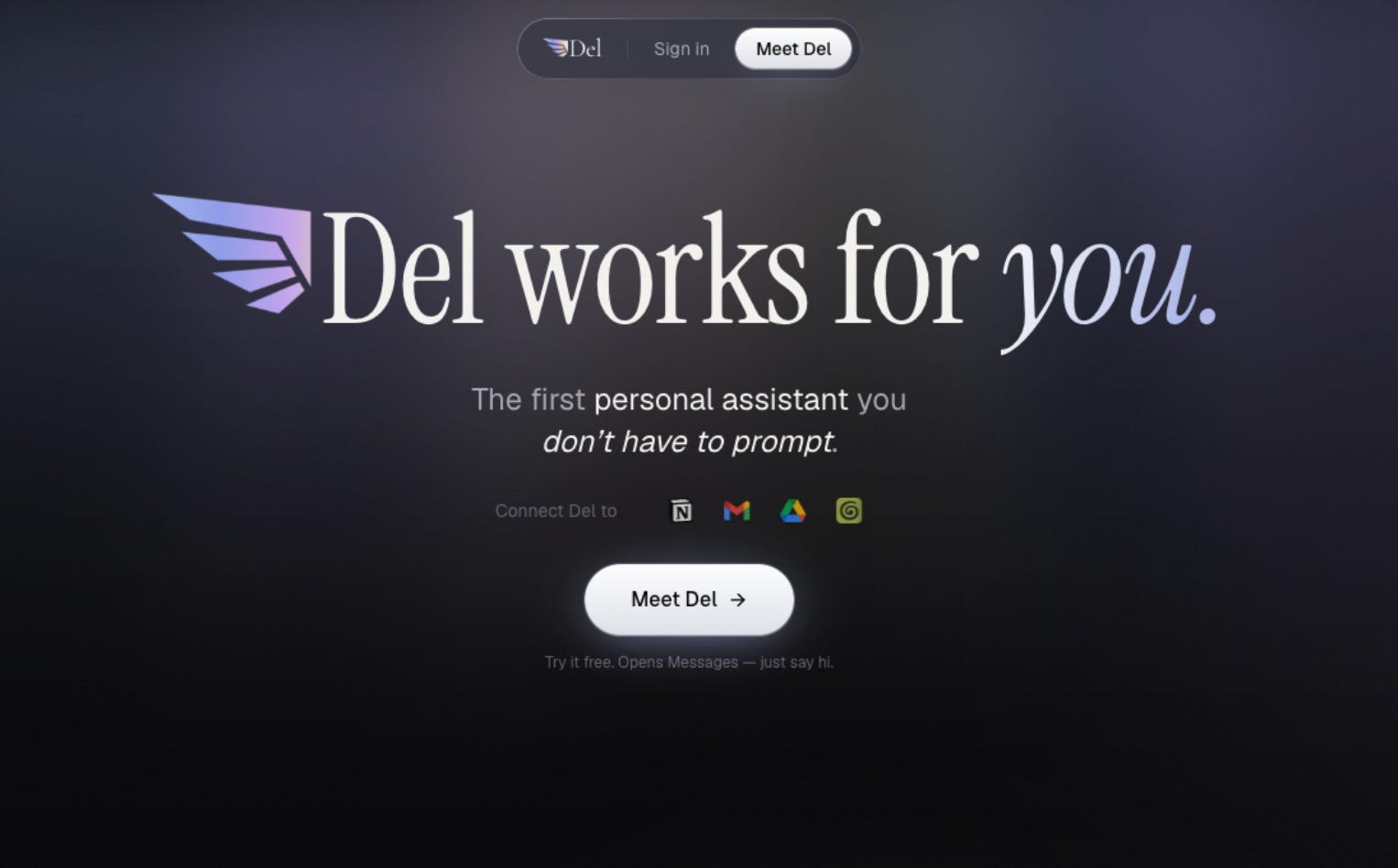
After this period, I pivoted ideas slightly to a conversational iMessage agent like Poke, but proactive, meaning it could reach out to you on its own. I called it Del. Instead of scrapping the todo list entirely, though, I kept it as a storage / memory layer for the agent and the user to use, which resulted in a bizarre Frankenstein product UX before I finally got the hint and scrapped it completely.
I launched Del on LinkedIn, as a personal executive assistant, with the main messaging revolving around how CEOs and executives have executive assistants to make them more productive, now you can too for just $20 a month. I thought this was incredibly compelling and everyone would want to have one but in reality, even most white collar workers don’t think they need a personal executive assistant. I was selling a discounted private jet to people with nowhere to be. Good product makers prove to themselves even before they launch that users value the product.
At this point, multiple users had sent me screenshots of Del proactively texting them something useful—a meeting briefing, an industry event they didn’t know about, a weekend rescheduling. I became convinced that proactivity was my unique differentiating edge. Looking back, I was obsessed with positioning and differentiation because of how many competitors also selling personal assistants; every few days, a new one would announce their launch, and 5 well-meaning friends would send me the post. In truth, competitor anxiety kills your company far more effectively than the competitors themselves ever could.
I obsessively studied all other players in the personal agent market: Town, Poke, Tomo, Zo, Vellum, Lindy, Folk, Gemini Spark, Noah, and so on. I could tell you all of their onboarding sequences, product UX, settings pages, agent features. I thought I could apply my “taste” and intuition to pick out the right features to copy from my competitors, who surely had already iterated against the market and done the hard work for me of figuring out what to build. It was the first-principles kind of intellectual arrogance / laziness that led me astray before. There are many reasons this is a bad idea: I was trying to extrapolate product market fit from a very narrow external view of their product, most competitors fail anyway and there’s no guarantee their product was any good, and the average of many products is very unlikely itself going to be itself a winning product.
I became so focused on this that I updated the marketing to revolve around Del being a proactive personal assistant. Worse than the fact that nobody knows a) what proactive means or, b) why they should care, still, nobody outside of Silicon Valley even wanted a personal assistant to begin with. I was positioning sheerly out of desperation to differentiate from competitors. The moment I did that, I was writing copy aimed at a buyer who has already decided to purchase a personal assistant and is now comparing options on the dimension of proactive-vs-reactive. How many such buyers existed? Maybe four thousand people on earth, all within ten miles of me. I lost sight of my customer, for whom the real alternative to having this kind of product is nothing. In a category with no established demand, position against the status quo, not against the competitive set.
I thought that this flood of competitors in the personal assistant market was a sign of immense market validation, and that I just needed to find the right contrarian angle that no one else was seeing. Actually, it’s, again, a telltale indicator of a tarpit category. It means the idea is cheap to build, obvious to everyone capable of building it, and you and your competitors are likely all racing to the bottom. In truth, a competitor flood validates supply, not demand. Nearly everyone in the personal assistant space is a builder selling personal agents to other builders. Almost nobody in the rest of America wants this, not as of August 2026.
I convinced myself that this competitive differentiating edge would come from some innovation I’d make on the core agent technology, close as I was to the frontier and bleeding edge of it—this was clearly motivated reasoning. The truth is, software companies have rarely had a technical moat. Facebook, Twitter, Airbnb built simple technical products and deep data and distribution moats. Especially now, when all the personal assistants are wrappers around the same model APIs, riding the same iMessage channel APIs, building the same agent harness feature sets, edge cannot come from capability. What I should have done was use the competitor flood as free research. Are any of us retaining paying customers?
Despite all of these bad signs about the market, at this point, I was deeply attached to what I had built. This made me perform all kinds of complex mental gymnastics to avoid pivoting away, and also sabotaged a potential cofounder relationship I was exploring when he didn’t agree with the direction. Finding PMF is the only thing that matters for a young startup, and if I were seeing it objectively, most of what I had built had no real value because none of it had yet found that elusive fit; I was merely pricing the months I had put in.
So, it’s August now, and in 4 months I’ve made more mistakes than I can count. It’s easy for me to fall in a trap of judging myself by outcomes, so instead I try to focus on the process.
There's no failure. If you were left on an island and it happened, you would just brush it off and move on. It's everybody else that you think is judging you. But then, here's the secret. They don't give a fuck about you. They are living their own lives. So it's your perception of what they think of you. There is no failure. There's do and learn. Do and learn. Do and learn.
—Chamath
I believe AI agents that do things end-to-end for you with a natural language interface like talking to a handyman, is the real breakthrough application of AI. Amazingly, it still has near-zero adoption among everyday people like my non-technical friends and my parents. For them, ChatGPT is just a better Google search.
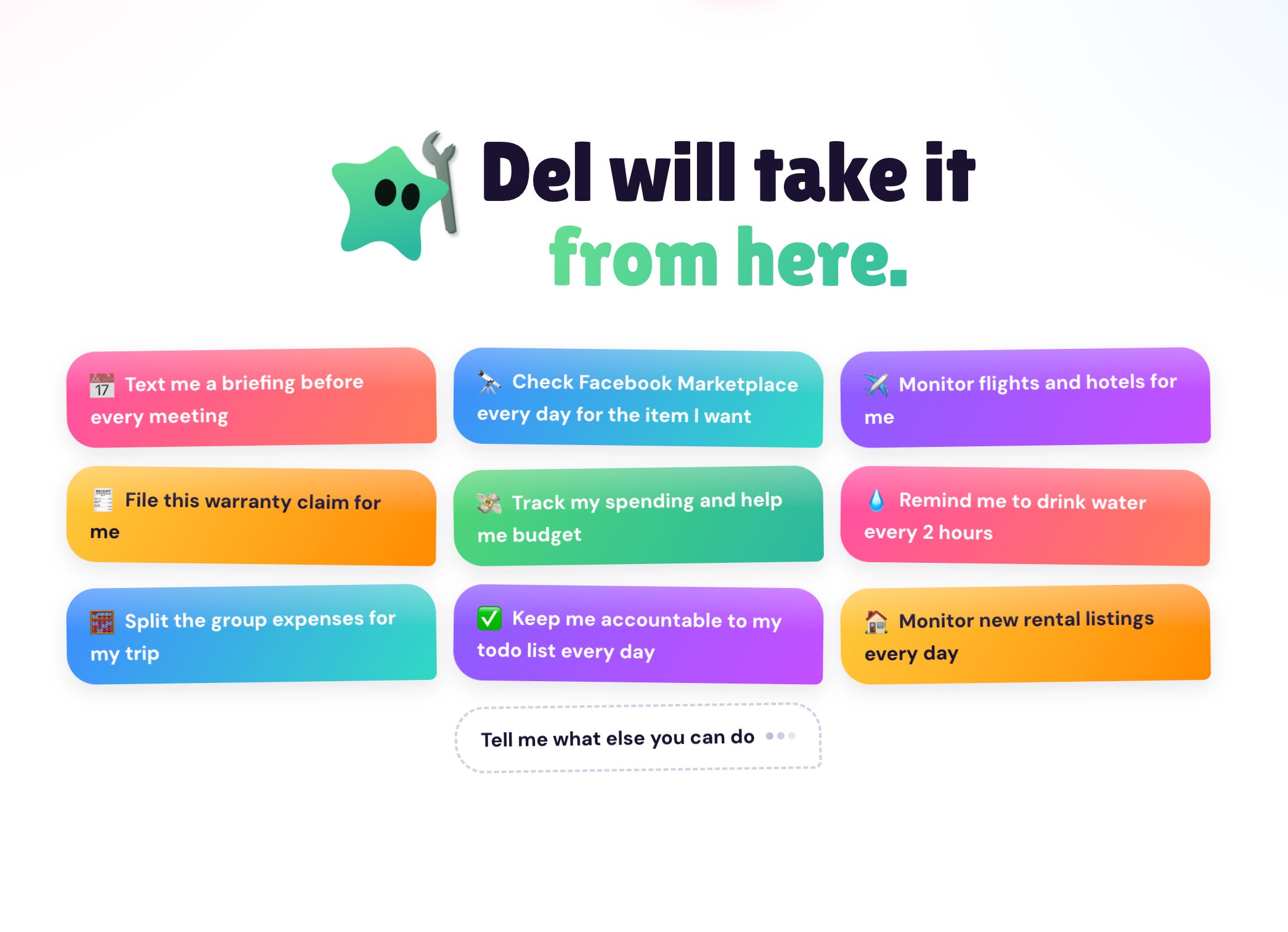
Imagine having someone you can text to call customer support for you to get a refund, sell your unworn clothes for you on FB marketplace, or check Zillow every 30 minutes for listings that match your exact criteria. Someone’s going to be the one who brings this to the rest of the world: busy moms, students, small business owners. I think the right solution will focus obsessively on being easy to use, accessible, and feeling like a helpful friend rather than a tool.
Now that I’ve stepped back and considered all that I’ve learned, I’m ready to begin again.
P.S. I’m always looking for 1. mentors 2. thoughtful friends and 3. potential cofounders. If you enjoyed reading this, I’d love to hear from you. Shoot me an email at e@evan.hu